


.png)
Winter Houseplant Care: 9 Plants to Prep This 2026 Fall

The best winter houseplant care starts in fall: adjust light, airflow, and plant placement before changing how much you water.
Picture the first cold week of the season. The windows close, the heat comes on, and the pothos that spent summer near the patio door moves back inside. A week later, one leaf turns yellow. The peace lily droops. The calathea curls. It feels like three separate watering emergencies, but the biggest change may be the room itself.
You do not need nine complicated schedules. Notice what changed around each plant, then follow the moisture guide that fits it.
Key Takeaways
Shorter days can slow plant growth, so many indoor plants use water more slowly in fall and winter.
Cold glass, heating vents, and dry indoor air can cause drooping, curling, and brown edges that look like watering problems.
Move plants for better light and steadier temperatures before adding extra water.
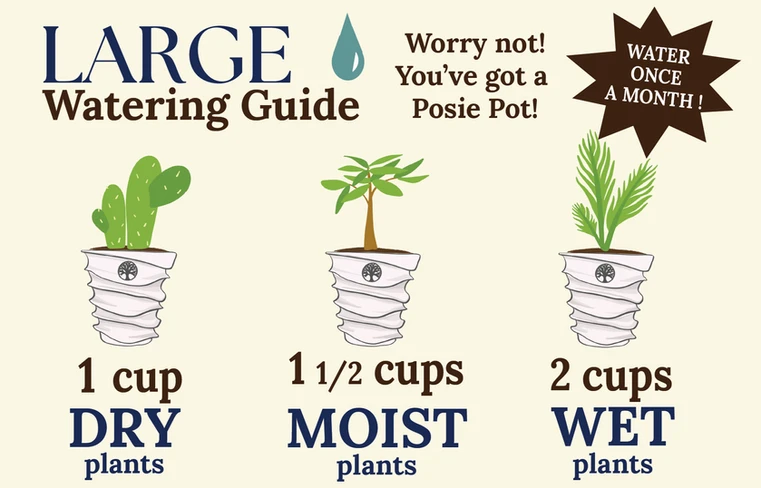
In a Posie Pot, use 1 cup for dry plants, 1.5 cups for moist plants, and 3 cups for wet plants.
Fall and Winter Houseplant Care Chart
Use this chart as a quick starting point. The symptom tells you what to inspect first; it is not an automatic instruction to add more water.
Plant | Common fall or winter concern | Check first | Posie Pot guide |
|---|---|---|---|
Pothos | Yellow leaves | Lower light or cold glass | Moist: 1.5 cups |
Snake plant | Soft or wrinkled leaves | Slower growth and soil condition | Dry: 1 cup |
ZZ plant | Little or no new growth | Normal seasonal slowdown | Dry: 1 cup |
Monstera | Drooping after summer | Reduced light and cold drafts | Moist: 1.5 cups |
Peace lily | Sudden drooping | Cold window or heating vent | Wet: 3 cups |
Spider plant | Brown leaf tips | Dry heated air | Moist: 1.5 cups |
Calathea | Curling leaves | Low humidity or temperature swings | Wet: 3 cups |
Boston fern | Browning fronds | Dry airflow and lower humidity | Wet: 3 cups |
Succulents and aloe | Stretching or soft growth | Not enough light | Dry: 1 cup |
What Should Change When Houseplants Move from Summer to Fall?
Start with the room, not the watering can. A shelf that looked bright in July may be much darker by October. Move plants closer to a suitable window, but keep leaves away from cold glass.
When the heat turns on, check whether warm air blows directly across the foliage. Pause fertilizing if a plant has stopped producing new growth. Keep rotating plants so one side does not spend the whole season reaching toward the window.
Watering is only one part of winter plant care. Light, temperature, humidity, and growth speed all change how a plant looks.
Winter Care for Plants That Prefer a Drier Rhythm
How Often Should I Water a Snake Plant in Winter?
Snake plants grow slowly in lower winter light and do not want constantly wet soil. Give yours bright light away from icy drafts. Soft leaves can point to excess moisture, while deeply wrinkled leaves may suggest prolonged dryness.
In a Posie Pot, snake plants follow the dry plant guide: add 1 cup to the interior reservoir. If the plant still looks unhappy, use our guide to why a snake plant may be dying to check light, temperature, roots, and soil before changing the routine.
Does a ZZ Plant Go Dormant in Winter?
A ZZ plant may slow down enough to look dormant. That is not an invitation to push it with extra fertilizer or water. Keep the leaves clean so they can use the available light, and protect the plant from cold drafts.
ZZ plants also follow the dry plant guide with 1 cup in the reservoir. If thick roots are crowding the planter, review the ZZ plant repotting guide before moving it.
Do Succulents and Aloe Need Less Water in Winter?
Succulents and aloe often slow down in lower winter light. Give them the brightest appropriate window you have, protect them from freezing glass, and do not answer stretched growth with extra water. Stretching usually asks for more light, not a fuller watering can.
Both follow the dry plant guide: add 1 cup to the reservoir. The smaller amount supports a clearer dry period.
Fall Care for Plants That Prefer Moderate Moisture
Why Are My Pothos Leaves Turning Yellow in Fall?
Pothos leaves often yellow after the light drops while the summer routine stays the same. Move the plant to brighter indirect light and away from cold glass. Check whether only an older leaf is fading before treating one yellow leaf as a crisis.
Pothos follows the moist plant guide: add 1.5 cups to the Posie Pot reservoir, then let the roots and soil take water when they need it.
Why Is My Monstera Drooping After Summer?
A monstera may droop when fall brings less light, colder windows, or a sudden move indoors. Rotate it for even light and keep leaves off the glass. Do not assume every droop means it needs more water.
Monstera follows the moist plant guide with 1.5 cups. If the plant has become top-heavy or root-bound, choose the right Posie Pot size before repotting.
Why Does My Spider Plant Get Brown Tips in Winter?
Brown tips often appear after indoor heat dries the air. Keep the plant away from direct vent airflow, trim only the brown portion, and watch the new growth for improvement. The damaged tip will not turn green again, but healthier new leaves show that the change helped.
Spider plants follow the moist plant guide: add 1.5 cups to the reservoir. Bright indirect light also helps striped varieties hold their color as the days shorten.
Winter Care for Moisture-Loving Indoor Plants
Why Is My Peace Lily Drooping Near a Cold Window?
Peace lilies can look dramatic when light or temperature changes. If yours droops beside a cold window, move it to bright indirect light in a more stable part of the room before deciding it needs more water.
Peace lilies follow the wet plant guide: add 3 cups to the reservoir. The roots and soil can take water when they need it without the repeated dry-to-soaked swing of traditional top watering.
Why Are My Calathea Leaves Curling When the Heat Turns On?
Calathea leaves may curl when the air dries, the room cools, or direct light becomes harsh. A small humidifier and a stable location can help more than repeatedly misting the leaves.
Calatheas follow the wet plant guide with 3 cups. Stable moisture and a stable location matter more than chasing every curled leaf with another pour of water.
How Do I Keep a Boston Fern Humid in Winter?
Boston ferns prefer steady moisture and higher humidity. Keep yours away from fireplaces and heating vents. Grouping plants or using a nearby humidifier can help, as can bright filtered light.
Ferns follow the wet plant guide: add 3 cups to the reservoir. The goal is dependable access to moisture, not soil that stays waterlogged.
What Posie Pot Changes About Winter Watering
Many plant parents respond to every yellow leaf, curl, or droop by checking the soil again. Then comes the familiar question: Is it too dry, or did I already give it too much?
With Posie Pot, measured water goes through the fill tube into a hidden interior reservoir. The roots and soil take water from the interior reservoir when they need it. There is no cotton wick, and the plant does not sit in a bowl of water.
Common indoor plants sold in garden centers have been tested in Posie Pot. The plant does not need a new personality or a complicated new routine. Follow the dry, moist, or wet guide, then spend your attention on seasonal changes you can actually see: light, drafts, temperature, and new growth.
See how Posie Pot simplifies watering when the rest of the season already feels busy.
Frequently Asked Questions About Winter Houseplant Care
Do Indoor Plants Need Less Water in Fall and Winter?
Many do because shorter days can slow their growth, but the answer depends on the plant and the room. Check light, temperature, airflow, and the plant's current growth before adding water more often.
Should I Fertilize Houseplants in Fall?
If the plant is still actively producing healthy new growth, follow its usual product directions. If growth has slowed or stopped, pause rather than forcing growth during a darker season.
Should I Move My Houseplants Closer to a Window in Winter?
Often, yes. A summer location may not provide enough usable light in fall. Move the plant gradually and keep leaves from touching cold glass.
Can Popular Indoor Plants Grow in a Posie Pot?
Yes. Plants commonly sold in garden centers have been tested in Posie Pot. Match the plant to the correct guide: 1 cup for dry plants, 1.5 cups for moist plants, or 3 cups for wet plants.
Does a Posie Pot Use a Cotton Wick?
No. Posie Pot uses a hidden interior reservoir rather than a cotton wick. The roots and soil take water from the reservoir when they need it.
What If My Plant Still Looks Unhappy After I Adjust Its Fall Care?
Send a photo, the plant name, and a quick note about where it sits to info@posiepot.com. The free Posie Pot Plant Clinic can help you look at the full situation instead of guessing from one symptom.
One Worry You Can Take Off the Fall Checklist
Season changes can affect light, temperature, humidity, and growth. They do not need to turn watering into a daily test. Follow the Posie Pot guide, make one environmental change at a time, and watch the plant's new growth rather than expecting an old damaged leaf to recover.
Explore Posie Pot self-watering planters and choose a worry-free home for the plants you already love.


